ScoreKeeperCo
Use Cases
PricingScoreKeeperCo
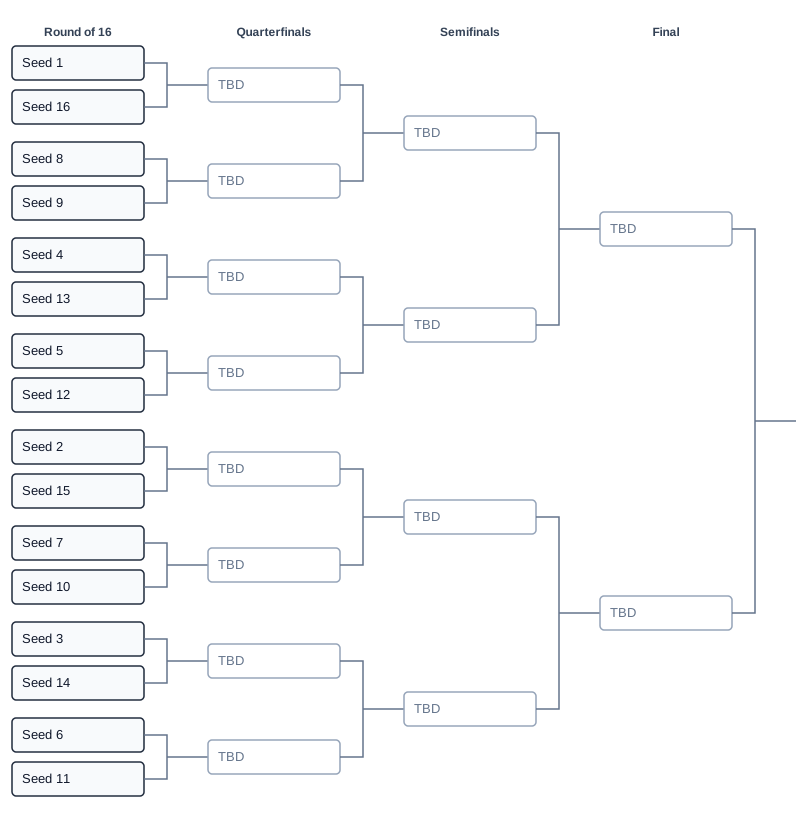
A pool tournament bracket is a diagram of every 8-ball or 9-ball matchup from round one to the final, showing who plays who and tracking winners as they advance through a race-to-N format.
A pool tournament bracket lays out every matchup from the first round through the final, so players and spectators always know who's up next and who's still alive in the tournament. Bar leagues, pool halls, and casual billiards nights all run on the same basic single elimination structure — win your match, advance; lose, and you're out.
8-ball tournaments are the most common format for bar and casual play — players are widely familiar with the rules, and matches have a natural rhythm. 9-ball tournaments are popular in more competitive settings because the rotation format (balls must be hit in numerical order) keeps games moving quickly and reduces long defensive standoffs. Either game type slots into the same bracket structure without any changes.
Instead of a single game deciding a match, pool tournaments almost always use a race format — first to win N games takes the match. A race-to-3 keeps early rounds short so the bracket moves quickly, while bumping up to race-to-5 or race-to-7 for the semifinal and final rewards sustained performance over a lucky break. Set your race length before the tournament starts and stick with it for every match at that round.
Table availability is the real bottleneck for any pool bracket. A 16-team single elimination bracket is 15 total matches — on one table, that's a full night or more; with two or three tables running simultaneously, a bar league can clear an entire round in under an hour. Plan your race length and table count together so the bracket doesn't stall out waiting on open tables.