
How to Run a Basketball Tournament
Running a basketball tournament means choosing a bracket format, scheduling games, lining up scorekeepers, and managing logistics from check-in to the final buzzer. Running a basketball tournament doesn't have to be chaos. Whether you're organizing a youth league championship, a 3v3 summer event, or a company basketball tournament, this guide walks you through everything from bracket setup to final buzzer.
Choose Your Tournament Format
The format depends on your time, courts, and number of teams.
Single Elimination
- Best for: Limited time, many teams, high stakes
- How it works: Lose once, you're out
- Pros: Quick, exciting, clear winner
- Cons: Teams may travel far for one game
Games needed by team count:
- 8 teams = 7 games (3 rounds)
- 16 teams = 15 games (4 rounds)
- 32 teams = 31 games (5 rounds)
Double Elimination
- Best for: Competitive leagues, when fairness matters
- How it works: Lose twice, you're out
- Pros: One bad game doesn't end your run
- Cons: Takes roughly twice as long
Round Robin
- Best for: Small groups, everyone plays everyone
- How it works: Each team plays all other teams
- Pros: Maximum games, fair seeding
- Cons: Time-intensive, no dramatic bracket
Pool Play + Bracket
- Best for: Large tournaments with limited time
- How it works: Teams play in pools, top teams advance to bracket
- Pros: Guarantees multiple games, seeds the bracket fairly
- Cons: More complex scheduling
How Many Courts Do You Need?
Rule of thumb for single elimination (assuming 30-minute games with 10-minute breaks):
With 1 court:
- 8 teams = 7+ hours
- 16 teams = 15+ hours (not recommended)
With 2 courts:
- 8 teams = 4 hours
- 16 teams = 8 hours
With 4 courts:
- 8 teams = 2 hours
- 16 teams = 4 hours
- 32 teams = 8 hours
For a one-day tournament, plan for:
- 8 teams, 1 court: Tight but doable
- 16 teams: Need 2+ courts
- 32+ teams: Need 4+ courts or multiple days
Create Your Schedule
Step 1: Set Game Length
- Youth (8-10): 20-minute running clock
- Youth (11-14): 24-28 minutes
- High school age: 32 minutes (8-minute quarters)
- Adult rec: 30-40 minutes
- 3v3: 15-20 minutes or first to 21
Step 2: Add Buffer Time
Between games, allow for:
- Teams to clear the court (2 min)
- Next teams to warm up (5 min)
- Clock reset, referee break (3 min)
Minimum buffer: 10 minutes between games
Step 3: Build the Bracket
For an 8-team single elimination example:
Round 1 (Quarterfinals)
- Game 1: Team 1 vs Team 8 — 9:00 AM
- Game 2: Team 4 vs Team 5 — 9:00 AM (Court 2)
- Game 3: Team 2 vs Team 7 — 9:45 AM
- Game 4: Team 3 vs Team 6 — 9:45 AM (Court 2)
Round 2 (Semifinals)
- Game 5: Winner G1 vs Winner G2 — 10:30 AM
- Game 6: Winner G3 vs Winner G4 — 10:30 AM (Court 2)
Championship
- Game 7: Winner G5 vs Winner G6 — 11:15 AM
Create your bracket instantly →
Seeding Teams Fairly
If you don't have prior records, options include:
- Random draw — Fair but may create mismatches
- Coach rankings — Each coach ranks teams (excluding their own)
- Pool play results — Play round-robin in pools first
- Prior season records — If available
Seeding placement for 8 teams:
- 1 vs 8
- 4 vs 5
- 2 vs 7
- 3 vs 6
This ensures top seeds don't meet until later rounds.
Equipment Checklist
Essential
- Basketballs (game ball + warm-up balls)
- Scoreboard or scoring app
- Whistles for referees
- First aid kit
- Printed bracket (backup)
- Team rosters
Recommended
- PA system / megaphone
- Folding tables for check-in
- Coolers with water/ice
- Printed schedules for each team
- Awards/trophies
Nice to Have
- Live streaming setup
- Digital scoreboard on TV
- Music/hype system
- Photography
Referee Logistics
How Many Refs?
- Youth rec: 1 ref per game is fine
- Competitive youth: 2 refs preferred
- High school+: 2-3 refs required
Ref Scheduling
If you have 2 referees and games every 45 minutes:
- Rotate so each ref gets breaks
- Have a backup ref on call
- Provide water and a shaded rest area
Payment
Typical rates:
- Youth rec: $25-40/game
- Competitive youth: $40-60/game
- High school: $50-75/game
Day-Of Timeline
Sample timeline for a 16-team tournament starting at 8 AM:
- 7:00 AM — Organizers arrive, set up
- 7:30 AM — Refs arrive, brief them
- 7:45 AM — Teams can start arriving
- 8:00 AM — Round 1 begins (8 games)
- 10:00 AM — Round 2 begins (4 games)
- 11:30 AM — Lunch break / Semifinals
- 12:30 PM — Championship game
- 1:15 PM — Awards ceremony
Digital Tools That Help
Bracket Management
Instead of whiteboards that smudge, use a digital bracket:
- Updates in real-time
- Share link with all teams
- No erasing/rewriting
Scorekeeping
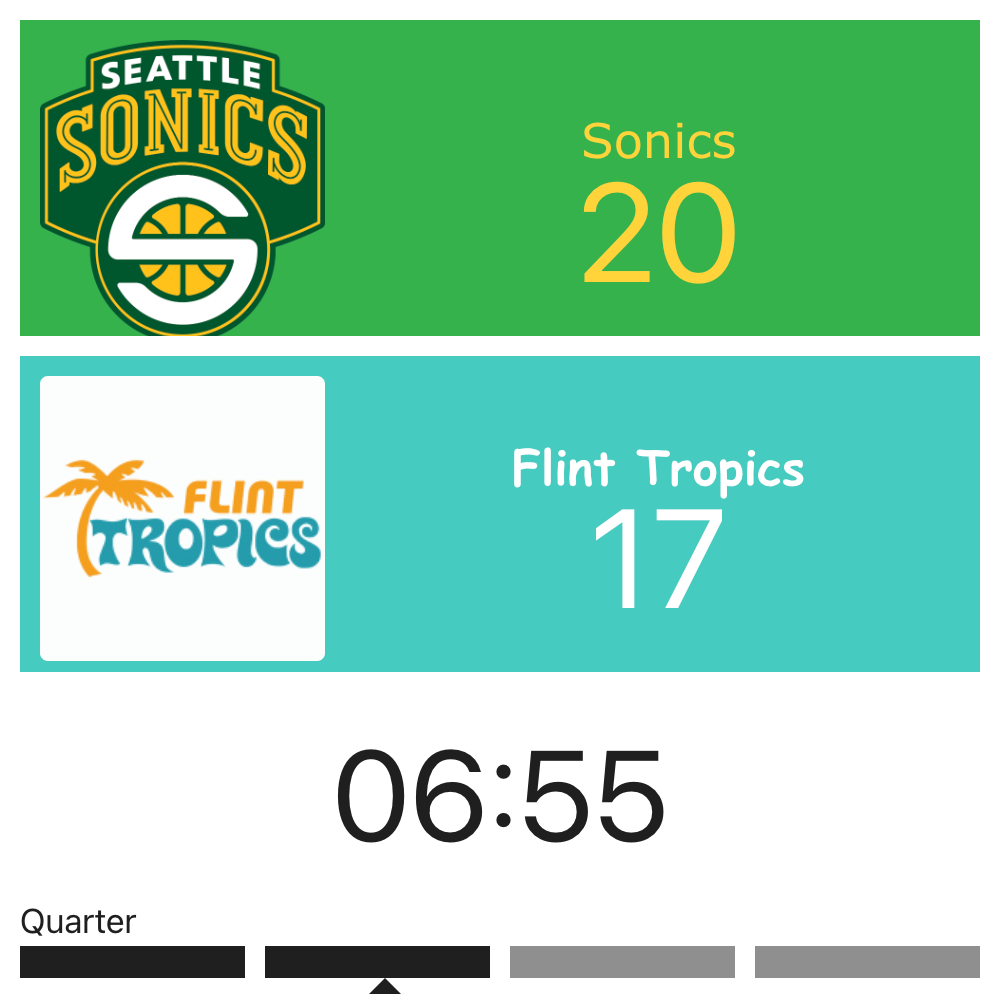
Per-game scoreboards that anyone can view:
- Parents follow from bleachers
- Remote family can watch scores
- No confusion about score
Leaderboards
For pool play or tracking stats:
- Point differentials
- Head-to-head records
- Standings updated live
Common Problems (and Solutions)
"Team didn't show up"
- Have a clear forfeit policy in rules
- Collect contact info during registration
- Text reminders the day before
"Score dispute"
- Designate official scorekeeper per game
- Use digital scoreboard as source of truth
- Ref has final say
"Running behind schedule"
- Build in buffer time from the start
- Have a "mercy rule" for blowouts
- Reduce warm-up time if needed
"Not enough refs"
- Cross-train parent volunteers
- Have coaches from eliminated teams help
- Self-officiate for early round rec games
3v3 Tournament Specifics
3v3 tournaments are increasingly popular. Key differences:
- Court: Half court
- Game length: First to 21 or 10-minute limit
- Scoring: 1s and 2s (inside/outside arc)
- Check ball: After every made basket
- Win by: 2 points or sudden death at time limit
You can fit more 3v3 games per court than full-court games, making it easier to run larger tournaments.
Youth Tournament Tips
Age-Appropriate Adjustments
- Lower hoops for younger kids
- Shorter games
- More frequent water breaks
- Participation awards for all
Parent Management
- Clear spectator areas
- No coaching from sidelines rule
- Designate a parent liaison per team
Safety First
- Check court for hazards before play
- Have emergency contact info for all players
- Know location of nearest hospital
Basketball Tournament FAQ
How do you run a basketball tournament?
Pick a format (single elimination, double elimination, pool play + bracket, or round robin), set the number of teams and game length, seed the teams, build the bracket, and schedule games across your available courts. Use a digital bracket tool to track winners as games finish — winners advance automatically, eliminated teams fall out, and everyone can follow standings live from a shared link.
What format should a basketball tournament use?
Single elimination is fastest and easiest — one loss and you're out, perfect for one-day events with 8-32 teams. Double elimination doubles the games but lets every team lose once before being eliminated — better for skill development. Pool play + bracket pairs guaranteed early games (round robin in pools) with a single-elimination playoff for fairness and full schedules. Round robin works for small fields (4-6 teams) where everyone plays everyone.
How many courts do you need for a basketball tournament?
It depends on field size and time. A typical guideline: 1 court can run roughly 8 single-elim games per day at 1 hour per game (40 minutes play + transitions). For 16 teams in a one-day single-elim, plan on 2 courts. For 32 teams or pool play, plan on 4+ courts.
How long does a basketball tournament take?
A 16-team single-elim runs about 5-6 hours on 2 courts. A 32-team single-elim is roughly 8 hours on 4 courts. Pool play + bracket is typically a 2-day event because of the higher game count. Always pad your schedule by 10-15% for delays.
What do you need to run a basketball tournament?
A bracket (digital or printed), scoreboards or score sheets per court, game clocks, timekeepers/scorekeepers per court, refs, court time, and a clear schedule for each team. ScoreKeeperCo's free bracket maker, basketball scoreboard, and leaderboard handle all of the score tracking — you just need the courts and people.
Create a free tournament bracket →
Ready to Run Your Tournament?
Get started with free tools:
Good luck with your tournament!